The narrow mountain roads leading out of Tirah Valley are filled with dust, broken silence, and desperation. Old cars loaded beyond capacity, buses packed with families, and trucks carrying entire lifetimes of belongings are slowly moving toward Peshawar.
For many residents of this remote valley in northwestern Pakistan, the journey is not a choice; it is a forced escape from an uncertain future.
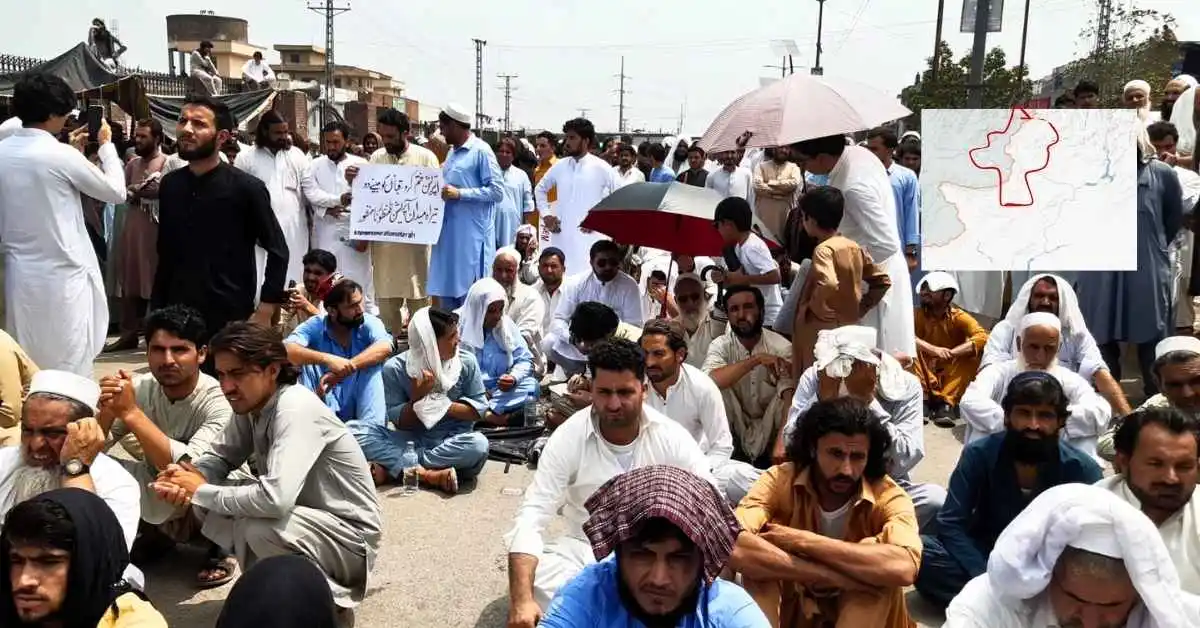
Over the past week, tens of thousands of people have left Tirah Valley after local residents say the Pakistani military ordered an evacuation ahead of a planned operation against suspected militants.
The valley, located near the Afghan border, is considered a stronghold of the Tehrik-e Taliban Pakistan (TTP), an armed group that has intensified attacks on security forces in recent months.
According to locals, the army gave residents a January 25 deadline to leave the area. Although government officials later denied issuing a formal evacuation order, people on the ground say otherwise. Tribal elders say they were informed directly by military officials that a large-scale operation was imminent.
For the families now on the road, the official statements mean little. Their homes are empty, their shops closed, and their future unclear.
“My Shop Is Gone, My Life Is Gone”
Saeed Khan, a shopkeeper from Tirah, stood beside a rented truck carrying 22 members of his extended family and whatever belongings they could save. His shop, the only source of income for his household, now sits abandoned behind him.
“That shop was my life,” he said quietly. “Now it is gone. My earnings are gone. I don’t know how I will feed my children.”
Saeed is one of nearly 80,000 people who have already reached the outskirts of Peshawar. Many others remain stuck along the road, waiting for permission to move through security checkpoints that have turned the three-hour journey into an exhausting ordeal lasting days.
The evacuation has taken place in the middle of harsh winter conditions. Snowfall has covered the roads, temperatures drop below freezing at night, and families are left sleeping in vehicles without food, water, or proper shelter.
Ihsanullah, a man in his mid-20s, left Tirah with women, elderly relatives, and young children. He described the road as “a slow-moving prison,” where people wait for hours at checkpoints without any information.
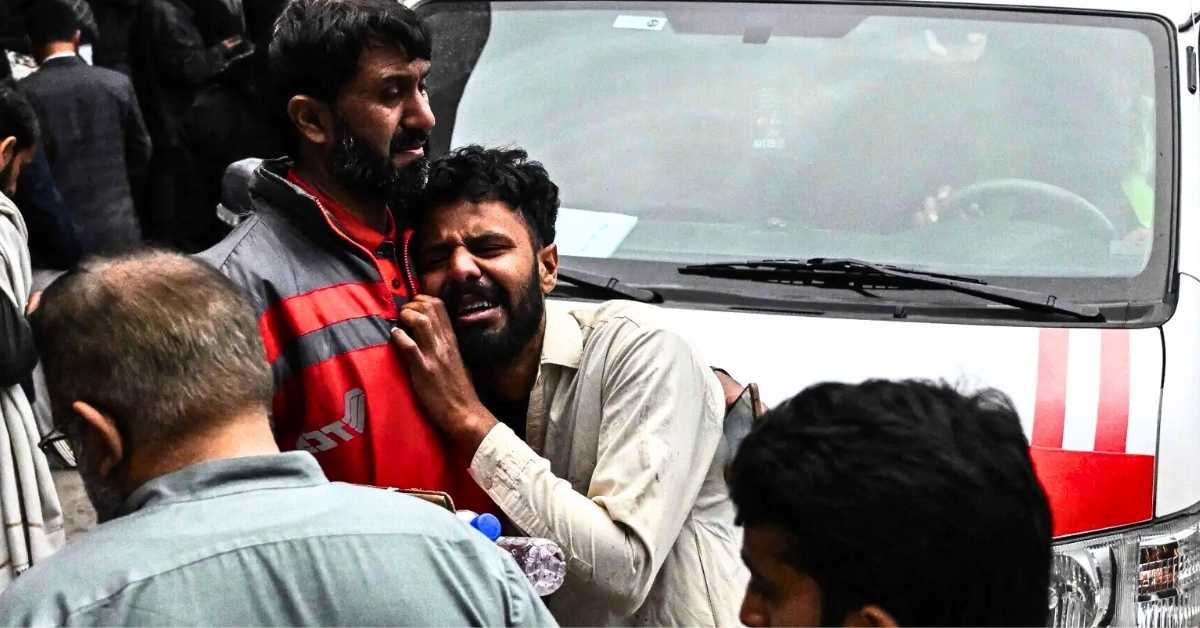
“One of my children became sick,” he said. “I begged the security personnel to let us pass. They refused. My child died before we could reach help.”
Two more children were killed on January 22 when their vehicle skidded off an icy road and plunged into a ravine. Heavy snowfall had made travel extremely dangerous, yet families had no option but to continue.
Most displaced families are now gathering in Bara, a town near Peshawar, where authorities have set up a registration process. After registering, each family receives 250,000 rupees to cover rent and daily expenses for two months, the expected duration of the military operation.
For many families, the money feels like a temporary bandage on a deep wound.
“How can this amount replace our homes, our shops, our farms?” asked an elderly man waiting in line with his grandchildren. “We don’t know if we will ever return.”
There is also fear that the operation could last much longer than promised. Past experience has taught residents that military campaigns often stretch for years, leaving entire communities in limbo.
For the people of Tirah, displacement is not new. The valley has been the site of multiple military operations since 2001, when the US-led invasion of Afghanistan reshaped the region’s security dynamics. Each operation pushed families out, destroyed homes, and changed lives forever.
Gulalai, a 25-year-old resident, remembers fleeing the valley as a child in 2010 during an earlier offensive.
“We returned in 2019,” she said. “But we could not even recognize our houses. Everything was destroyed. No compensation. No help.”
Now, she and her family are displaced once again, reliving the same nightmare.
“It feels like we are being punished for living on our own land,” she said.
Pashtun Communities Caught in the Crossfire
Northwestern Pakistan is home to the Pashtun ethnic community, many of whom live in areas caught between militant violence and military operations. While the TTP recruits from Pashtun regions, the majority of Pashtuns have suffered because of the conflict, not benefited from it.
Human rights groups have long accused Pakistan’s security forces of abuses in these areas, including forced displacement, property destruction, and lack of accountability. Such actions, analysts say, often deepen anger and mistrust, creating a cycle that fuels further instability.
“The people are trapped between two fires,” said a local journalist. “Militants on one side, the state on the other.”
On January 24, the Pakistani government denied that the army had ordered an evacuation. But this statement was quickly rejected by residents and tribal elders who say they were directly instructed to leave.
The military has remained silent, adding to confusion and frustration among displaced families.
“They tell the media one thing and tell us something else,” said a tribal elder. “We are the ones suffering, not them.”
As night falls in Bara, families huddle around small fires, children cry from hunger and cold, and elders stare into the darkness, unsure of what lies ahead. Some fear they may never return. Others worry that even if they do, their homes will no longer exist.
For the people of Tirah, displacement is more than a physical journey; it is the loss of stability, dignity, and hope. Once again, they are being forced to leave behind their land, their memories, and their lives, carrying only the weight of uncertainty into an unknown future.